


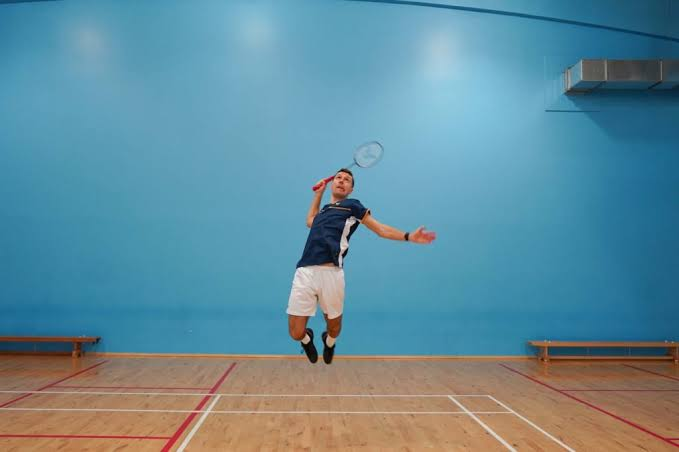
Perfecting the Around-the-Head Shot: Your Ultimate Weapon for Rear-Court Defense
The backhand rear corner is notoriously the most difficult area of the court to defend. When pushed deep into this zone, most players instinctively resort to a weak, defensive backhand clear that practically invites their opponent to deliver a crushing smash. However, in advanced badminton, giving up the attack is simply not an option.
Enter the around-the-head shot. It might look a little awkward to beginners—contorting your upper body to strike a shuttle on your backhand side using a forehand swing—but it is an absolutely essential technique for maintaining offensive pressure from the deepest corners of the court.
Why Choose Around-the-Head Over a Backhand?
Superior Power and Pace: A forehand swing inherently generates significantly more power than a backhand. By leaning out and taking the shuttle around your head, you can hit a penetrating attacking clear, a fast flat drive, or a surprise cross-court drop.
Total Deception: Because you are utilizing your standard overhead forehand preparation, your opponent cannot instantly tell what shot you are going to play.
Rapid Court Recovery: Hitting a traditional backhand forces you to turn your back completely to the net. An around-the-head shot allows you to keep your hips partially open to the court, enabling a much faster recovery step back to your central base.
Perfecting the Execution
To master this awkward-looking but lethal shot, you need to focus on three critical phases of movement:
The Scissor Kick Footwork: You must get your body behind the shuttle. Lunge diagonally into the deep backhand corner with your non-dominant foot leading. As you prepare to strike, execute a rapid “scissor kick” in the air, dynamically swapping your feet to generate rotational power.
The Arch and Reach: Arch your back and tilt your torso heavily to your non-dominant side. Your racket arm must reach out and over your head to strike the shuttle slightly behind and above your non-dominant shoulder.
The Follow-Through: Because your body is tilted to the side, your follow-through will naturally finish across your body rather than straight down. Allow the momentum of the heavy swing to pull your dominant foot forward, which immediately launches your recovery back to the center of the court.