


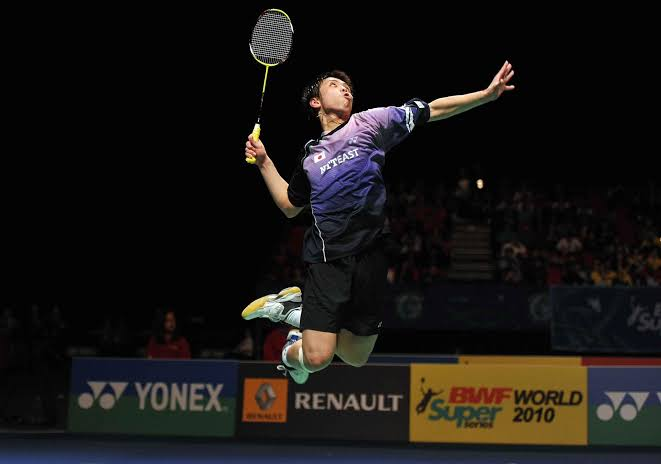
Mastering the Cross-Court Smash: Why Angle is Everything
In badminton, the straight jump smash is the crowd-pleaser—it is loud, fast, and aggressive. But as you climb the ranks, opponents become highly adept at blocking straight attacks. To truly break down an elite defense, you must integrate the cross-court smash into your offensive strategy.
However, this shot is a double-edged sword. It travels a longer distance than a straight down-the-line smash, giving your opponent a fraction of a second more to react. If you don’t execute it with the correct angle, or if you fail to recover instantly, you leave the entire opposite side of your court wide open for a devastating counter-attack.
The Geometry of the Cross-Court Attack
When you hit cross-court, the shuttle must pass over the highest part of the net (the edges are naturally slightly higher than the center tape) and travel on a diagonal plane.
Because of this added distance, raw power will not guarantee a point. The secret is the angle of descent. A perfectly executed cross-court smash should land within the tramlines (the side alleys) and ideally in front of the mid-court line. If your smash lands too deep in the rear court, it loses its sting and simply becomes a fast clear, easily returned by your opponent.
Execution: Slicing for Steepness
To achieve that steep, unreachable angle, you cannot hit the shuttle perfectly flat. You need to employ a slight “slice.”
Body Positioning: Prepare just as you would for a standard straight smash to disguise your intention. Keep your shoulders turned side-on to the net.
The Point of Contact: Strike the shuttle slightly further out to your side than you would for a straight smash.
The Wrist Snap and Slice: As your racket makes contact, brush the strings slightly across the cork of the shuttle (cutting the shuttle). This slicing motion sacrifices a small amount of outright speed but imparts a heavy downward trajectory, causing the shuttle to dive sharply over the net and pull your opponent out of their defensive base.
Surviving the Counter-Attack: The Vulnerability Zone
The biggest risk of the cross-court smash is what happens immediately after you hit it.
When you swing across your body, your momentum naturally pulls you outward toward the sideline. If your opponent successfully blocks the smash straight down the line (the classic “straight block” defense), you are suddenly trapped on the wrong side of the court, staring at a massive open space.
To avoid this vulnerability:
Do not over-commit your body weight: You must maintain enough core control in the air to land in a balanced, wide stance.
The Recoil: The second your feet touch the floor, use your outside foot to explosively push yourself back toward the center line.
Anticipate the Straight Block: Elite players hit cross-court expecting the straight return. Your racket should already be coming up to intercept the block before the opponent even makes contact.